
What You Carry Forward: Integration and the Cultivation of Embodied Knowing
Part 3: What Shifts When You Participate Rather Than Consume

Parts 1 and 2 traced the pattern: how the biological infrastructure of food sovereignty was systematically dismantled, and what the actual work of restoration looks like in soil, in seed, in mineral correction, in the practices that rebuild competence season by season.
This final part moves into a different register ~ not technique, but transformation. What changes in you when you grow your own food. Why that change is not metaphorical. And what it means to carry this knowledge forward when everything in the surrounding culture is organized to make you forget it.
The Moment That Matters
There is a specific moment in every new grower’s first season that I have watched happen many times and it never stops carrying weight.
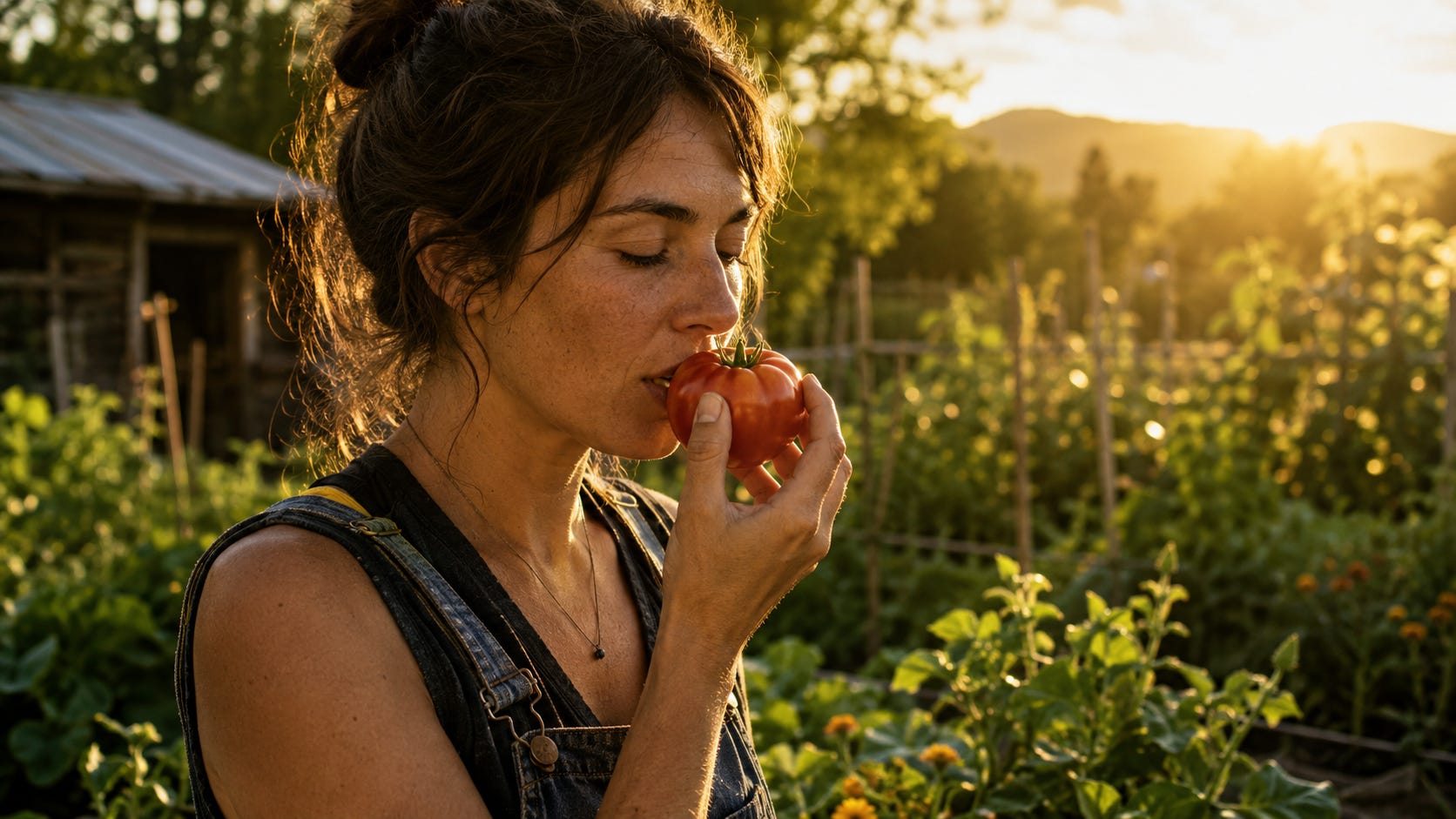
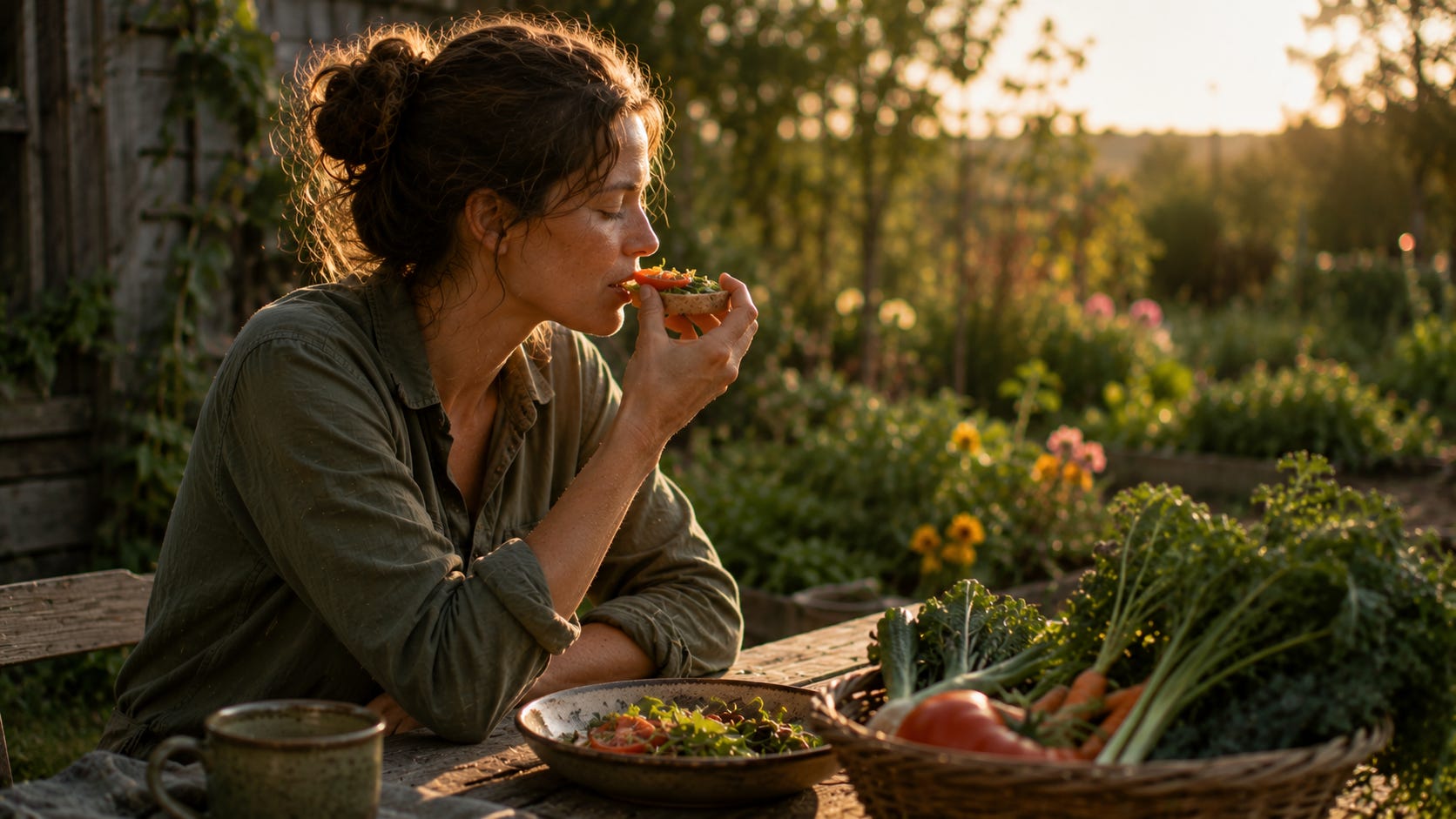
It is the moment you eat something you grew.
Not buying it. Not receiving it. Not even harvesting it ~ though that has its own quality. The moment you put it in your mouth and taste it, knowing that it did not exist six weeks ago, that it was a seed in your hand and then a seedling in your care and then this ~ this specific tomato, this specific handful of beans, this leaf of sorrel that reseeded itself with the confidence of something that has been doing this for centuries.
The taste is different. This is not romance. This is measurable, biochemical reality ~ a plant grown in living soil, harvested at true ripeness rather than shipped-green convenience, contains a nutritional and flavor profile that commercially grown equivalents cannot approach. The sugar-to-acid balance. The mineral depth. The volatile aromatic compounds that dissipate within hours of harvest and are simply absent in anything that traveled more than a day to reach you.
But the taste is not the whole of it. Because something else happens in that moment that has nothing to do with chemistry.
Your body receives information it has been waiting for.
The Two Kinds of Knowing
There is knowing about a thing and there is knowing from inside a thing. Both are real. Neither replaces the other. But they produce categorically different relationships to what is known.
You can read everything ever written about soil microbiology: the fungal networks, the nitrogen-fixing bacteria, the mycorrhizal exchanges, the living complexity beneath the surface of a healthy garden bed ~ and hold it as accurate, fascinating, intellectually satisfying information. That is one kind of knowing. It is not nothing.
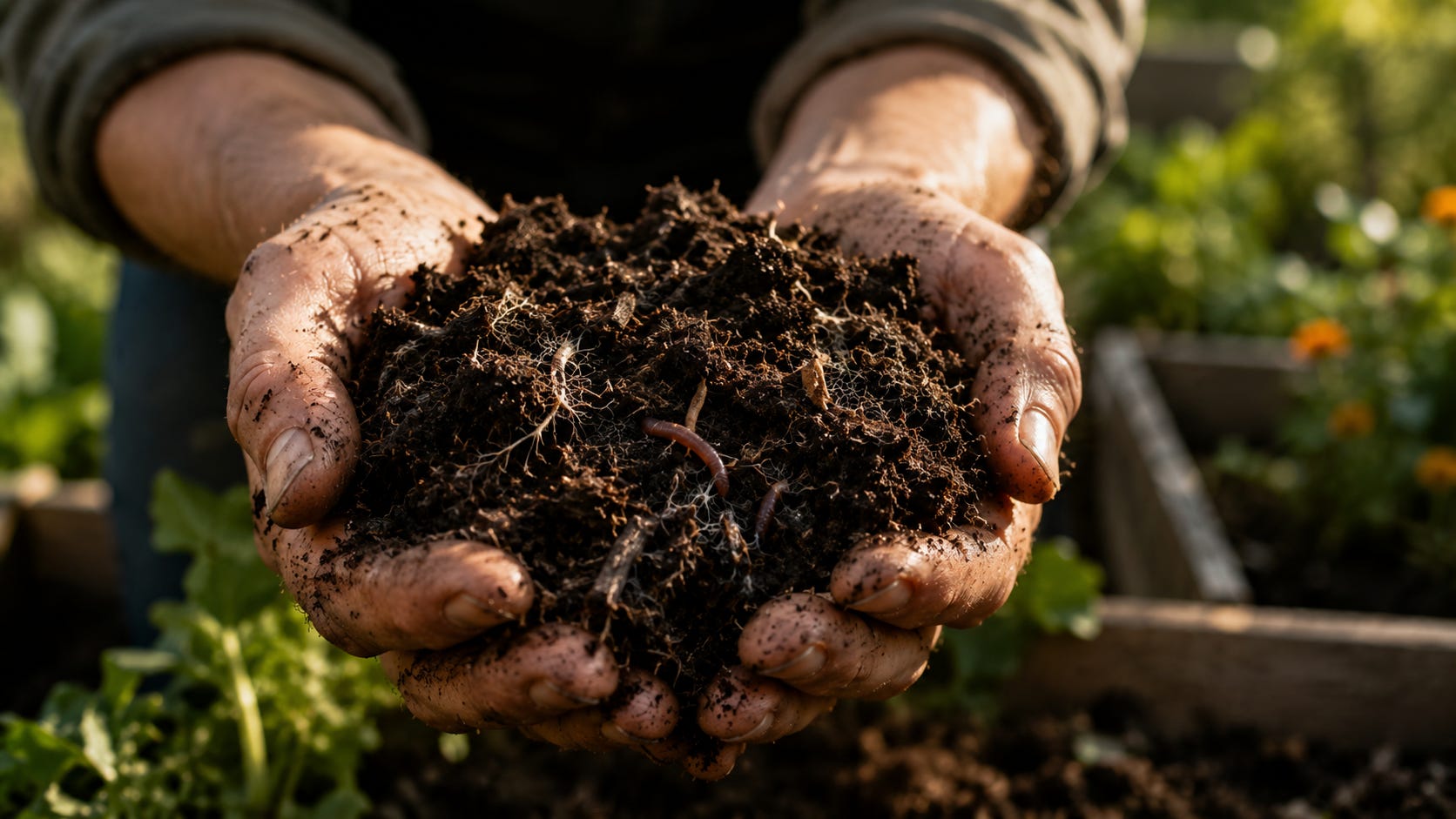
Then you open a shovelful of healthy soil you have been building for two seasons. The smell hits first ~ that particular earthy sweetness that is actually the volatile compound geosmin, produced by actinobacteria as a byproduct of decomposition, the same smell that rises from earth after rain. Then you see the structure: the dark crumble, the threads of fungal mycelium, the earthworms moving through it. You hold it in your hands.
That is a different kind of knowing entirely.
It is not more information. It is a different relationship to the information you already had. The reading gave you the map. The soil in your hands gave you the territory. And the territory, once entered, changes how you read every map afterward.
This is what embodied knowing actually is. Not the absence of intellectual knowledge ~ but intellectual knowledge that has been metabolized through direct participation into something that lives in the body as well as the mind. The grower who has held living soil reads differently than the one who hasn’t. The herbalist who has watched a plant through its full seasonal cycle: germination, growth, flowering, seed set, senescence ~ brings a different quality of attention to the pharmacology than one who has only encountered the plant as dried material in a jar.
The knowledge changes when the body has been in it.
This is what the culture of consumption cannot provide. You can subscribe to every food sovereignty newsletter, read every permaculture text, watch every growing tutorial, and accumulate vast amounts of accurate information about growing food. None of it produces the same knowing as a single season of hands in soil. The participation is not a supplement to the knowledge. In some fundamental sense, it is the knowledge.
What the Nervous System Actually Registers
Modern dysregulation is usually framed as a stress problem. Too much stimulation. Too many demands. Too little rest. The interventions proposed are correspondingly individual: breathwork, meditation, supplements, nervous system regulation practices.
These are not wrong. They address real physiological dynamics. But they miss something structural that operates beneath the level of individual practice.
When you cannot feed yourself, your nervous system registers it as threat.
Not consciously, necessarily. Not as an articulated fear. But at the level of autonomic regulation ~ the background your nervous system is running constantly, beneath conscious awareness, assessing the fundamental question of survival safety, the inability to meet your own basic needs reads as vulnerability.
This is not metaphor. This is the actual logic of the vagal nerve, the parasympathetic branch of the autonomic nervous system, the regulatory infrastructure that governs digestion, immune function, social engagement, and the capacity to rest and repair. All of this depends on a baseline assessment of safety. And safety, at the most foundational physiological level, is resource access: the capacity to meet the survival requirements of your own body.
For most of human history, that capacity was embedded in competence. You knew how to grow food, or you were embedded in a community where that knowledge was distributed and accessible laterally. The baseline of survival competence was present at the body level. Not as a conscious belief but as actual skill, actual relationship with the land, actual knowledge that if the systems around you failed you could still feed yourself and the people in your care.
That competence baseline is gone for most people in the developed world.
And the nervous system cost is real, pervasive, and almost never named in discussions of modern chronic stress and dysregulation.
You can be objectively safe by every material measure ~ housed, employed, adequately fed by industrial systems. And still carry the autonomic signature of someone whose fundamental survival is contingent on systems they do not control and cannot opt out of. Because it is contingent on those systems. The grocery store delivers abundance, and your nervous system registers the dependency behind the abundance, even if your conscious mind is focused on the product selection.
This is not paranoia. This is accurate threat assessment operating below the level of conscious thought.
What changes when you grow something that feeds you. Even once, even a pot of herbs on a windowsill, even a tray of sprouts on a kitchen counter, is not just a skill added to a repertoire. What changes is this background assessment. Something registers at the autonomic level: you are capable of participating in your own survival. The knowledge is available. The ground responds. You are not entirely dependent.
That shift is not small. It does not resolve everything. But it moves the needle on a regulatory parameter that no amount of breathwork or supplementation directly addresses. Because, the deficit it corrects is not physiological in the conventional sense. It is competence-shaped. Participation-shaped. Sovereignty-shaped.
Integration: How the Layers Compound
The course this essay series has been circling is called Layer 3 for a reason. It is part of a sequence, and the sequencing is not arbitrary.
Layer 1 is how you see food. The relationship between what you eat and how your body functions. Food as information, as nourishment, as the raw material from which your body builds and repairs and regulates itself. This layer shifts the frame from food as fuel or pleasure or social currency to food as the most direct interface between your body and the living systems that produce it.
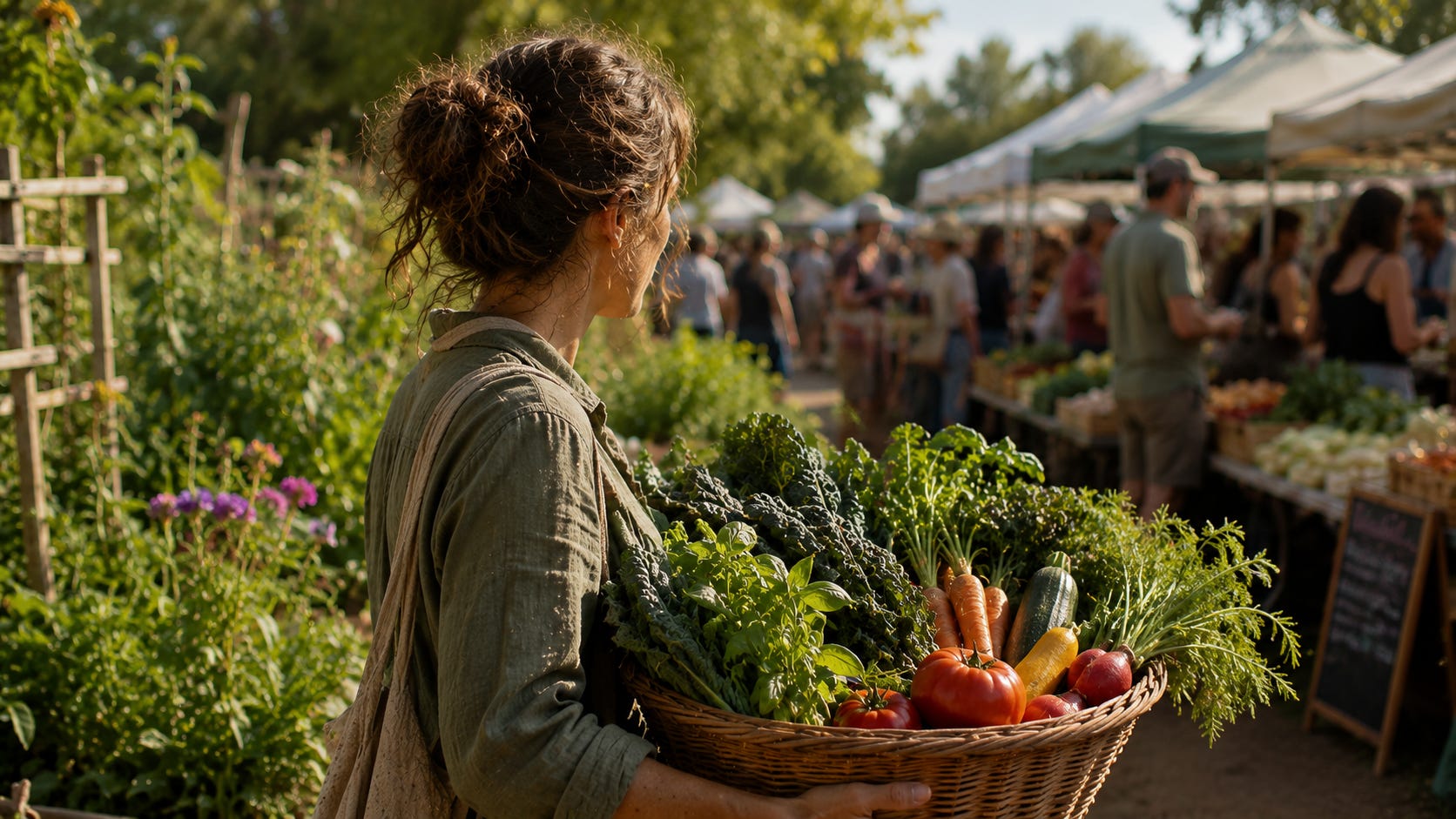
Layer 2 is how you source food. The difference between industrial supply chains and local, seasonal, relationship-based sourcing. The farmer’s market as more than an aesthetic preference. Rather, a radically different food system with different accountability, different nutritional outcomes, different ecological relationships.
Layer 3 is how you grow food. Direct participation. Hands in soil. Seed to harvest.
What I’ve observed across thirty years of this work is that these layers do not simply add to each other. They compound. Each one retroactively deepens the ones before it.
When you grow food yourself, your relationship to sourcing shifts in a way that no amount of reading about supply chains produces. You know intuitively, not conceptually, but from the inside, why a tomato grown in your garden and eaten the same day tastes different from one shipped across a continent. You’ve felt the difference between living soil and depleted medium in your hands. You’ve watched a plant struggle in compacted earth and thrive in the biology-rich compost you built. You’ve harvested something at actual ripeness rather than anticipated-shipping-date ripeness.
When you take that knowledge to the farmer’s market, you are no longer a consumer choosing between aesthetic options. You are a grower recognizing the work in someone else’s work. The price the farmer charges stops being an abstraction and becomes legible. The seasonal availability stops being inconvenient and becomes intelligible. The relationship between the grower and the land behind the stand: the specific decisions about soil amendments, variety selection, water management ~ becomes something you can read.
When you know soil biology from having built it, your relationship to food as nourishment shifts again. The mineral content of what you eat is determined by the biological health of the soil it grew in. This is not a dietary principle. It is an agricultural reality, and it is only fully graspable from inside the experience of building soil biology and watching what it produces. The supplement aisle looks different when you’ve watched magnesium deficiency show up in leaf color and corrected it in soil and then eaten from that corrected soil. The whole architecture of modern nutritional supplementation looks different when you’ve innerstood that the deficiencies being supplemented are primarily the downstream consequence of dismantled soil biology.
The layers compound. That’s the design. And integration is not a lesson you complete. It is a process that deepens indefinitely, each season adding resolution to the picture that the seasons before it began building.
The Cultivation of Embodied Knowing
Cultivation is a word worth sitting with.
Its root is the Latin cultus ~ care, tilling, worship. The same root that gives us culture, cult, cultivar. To cultivate is to tend with attention over time. To create conditions for something to grow that would not grow without your care.
Most people think of cultivation as something you do to plants. I want to suggest it is equally something you do to knowledge.
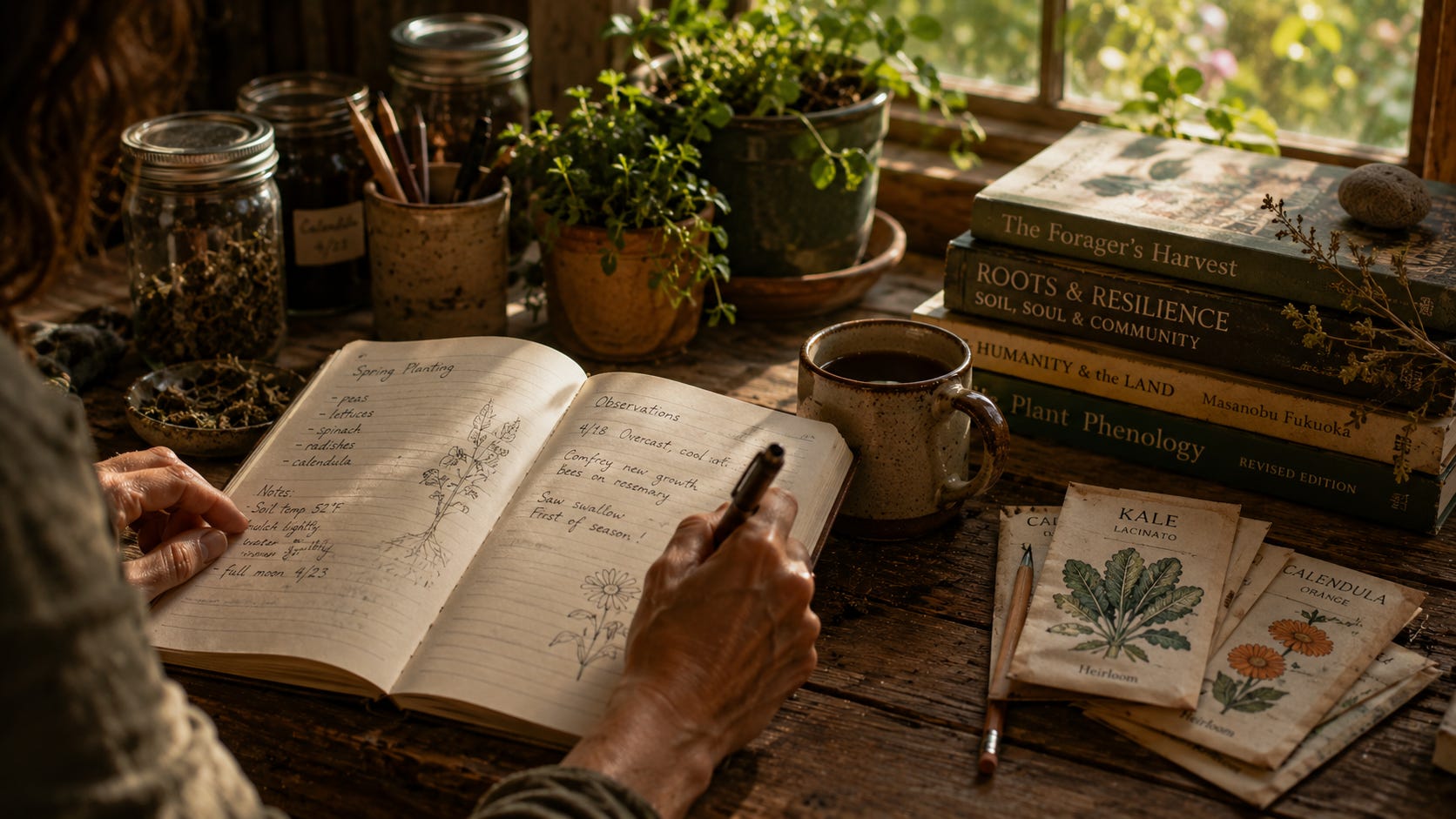
Embodied knowing is not acquired. It is cultivated. It grows in the same way a plant grows. Not through a single decisive action but through repeated, attentive participation over time. You put seeds in the ground and observe what happens. You write it down. Next season, you adjust based on what you observed. You plant again. You observe again. After five seasons, you know your specific microclimate in a way that no guide written for a general audience can give you. After ten, you know it in a way that begins to approach what your great-grandparents would have known about the land they inhabited. The actual patterns of frost and rainfall and soil behavior that belong to that specific place.
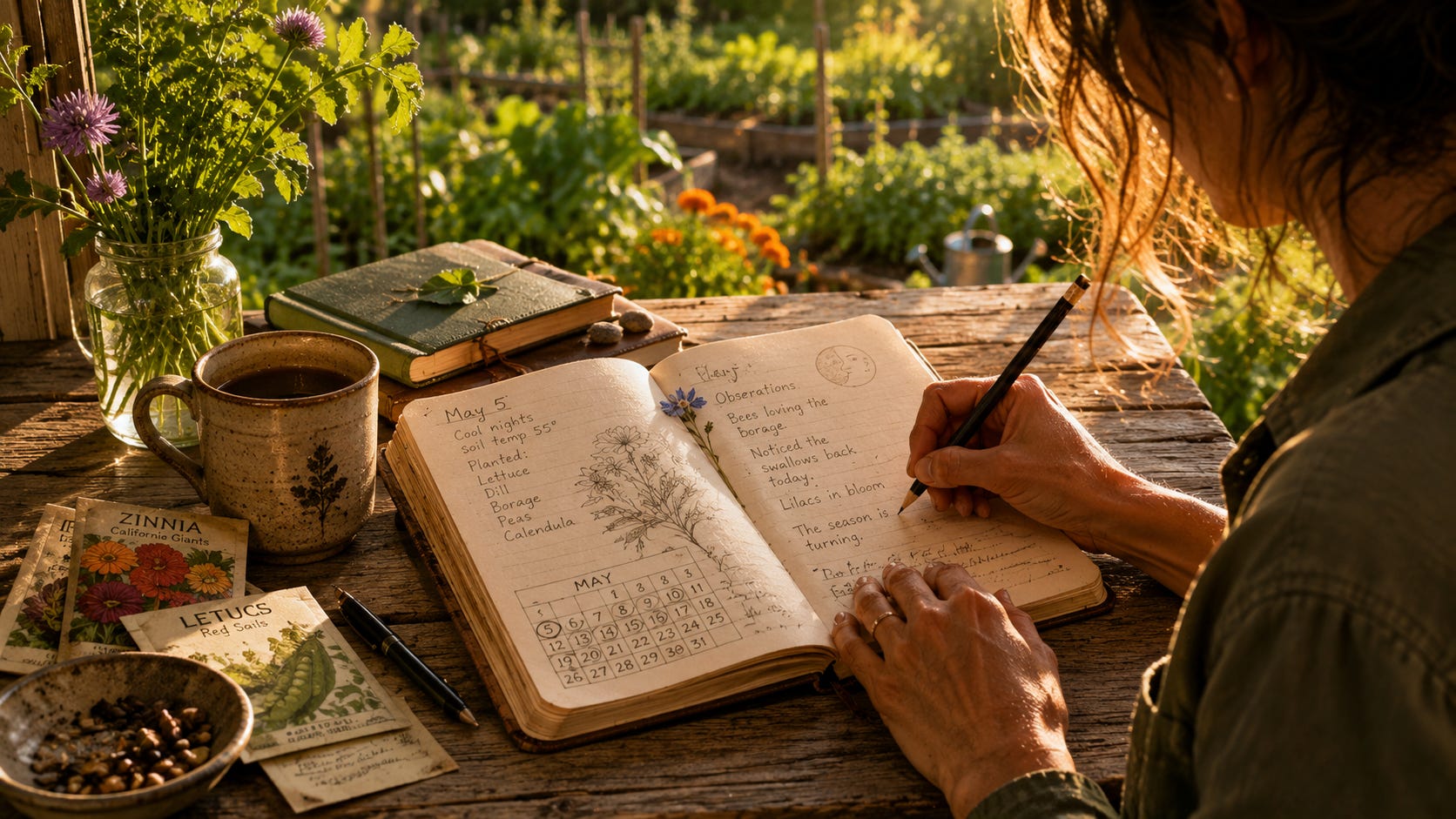
The growing journal is the external record of this internal cultivation. It matters not because you’ll necessarily refer back to every entry ~ though you will refer back to more than you expect ~ but because the act of writing it down is itself part of the cultivation process. Observation, articulation, record. The loop closes. The knowing deepens.
What you’re building, season by season, is something that has no market equivalent.
It lives in you.
This is the pattern the dominant culture does not profit from. And therefore, does not support, celebrate, or make easy. The cultivation of embodied knowing is structurally at odds with the economy. Every season you build your own knowledge base, you are slightly less dependent on someone else’s content. Every season your growing journal thickens with specific observation, the generic guide loses authority.
From a systems perspective, this is exactly what sovereignty looks like at the individual level. Not independence in the sense of isolation. The most functional growers I know are deeply embedded in knowledge-sharing communities. But independence in the sense of having a foundation of knowing that belongs to you, that you built, that compounds in value every season rather than depreciating.
Phenology: Reading the Patterns That Predate Writing
Before there were written planting guides, before seed catalogs, before the agricultural extension service, people grew food by reading patterns that existed in the living landscape around them.
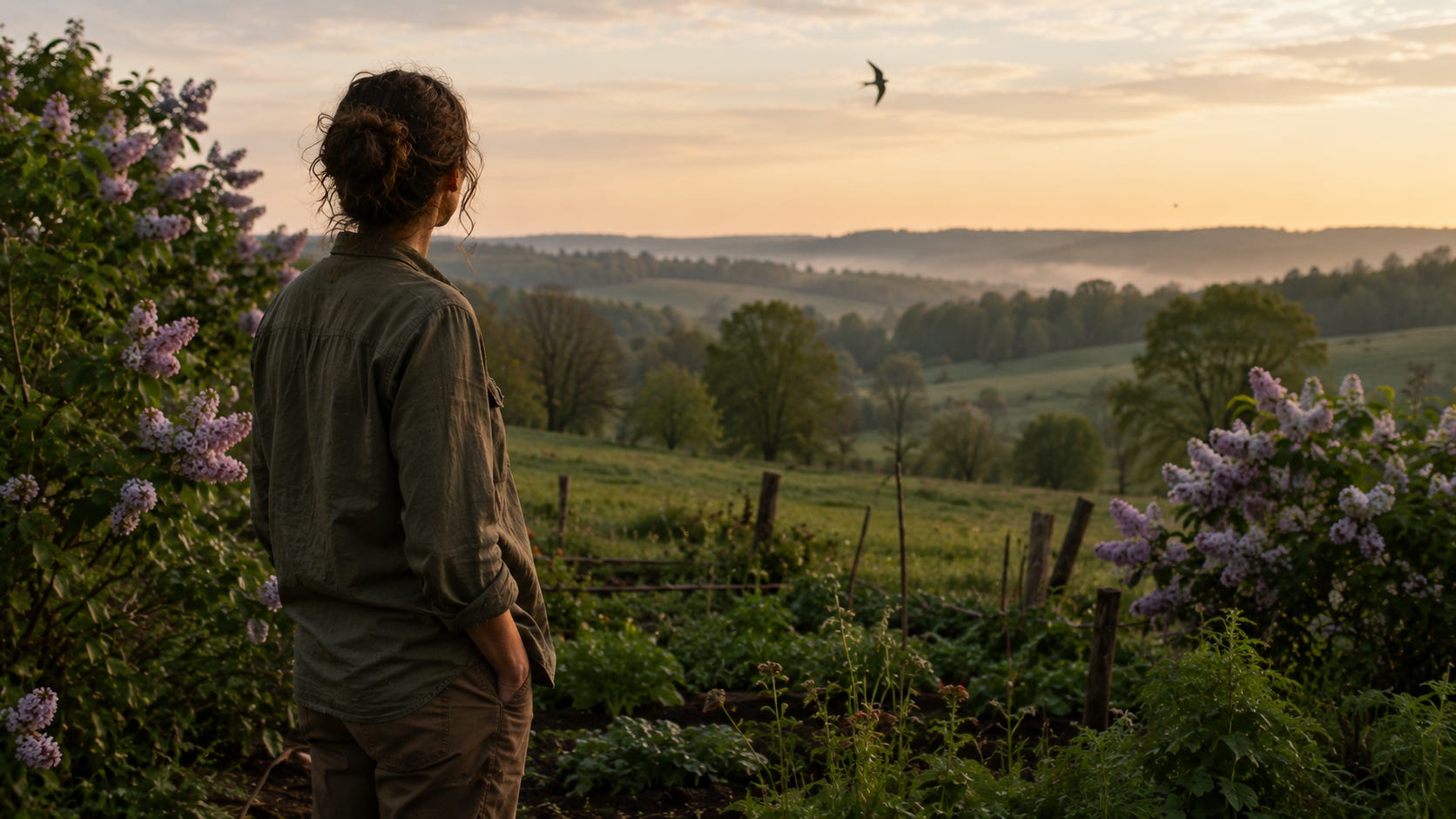
Phenology is the study of these patterns ~ the timing relationships between biological events. The elderberry blooms when the soil is warm enough for beans. The oak leafs out when late frost risk has passed. The swallows return when the insects they eat are abundant enough to sustain them, which is the same moment the garden comes alive with the pest pressure that requires managing. The relationships are real, encoded over thousands of years of coexisting between species that share the same seasonal rhythms.
Your landscape speaks this language constantly. Most modern people have simply lost the fluency to read it.
Recovering that fluency is a practice, not a technique. It does not happen through reading about phenology. It happens through developing the habit of looking. Of noting when the first spring ephemerals emerge, when the lilac blooms, when the swallows appear, when the last frost actually arrives in your specific location in relation to all of these markers.
Add a column to your growing journal for phenological observations. Not just planting dates and harvest yields ~ but what was blooming when you planted, what the weather had been for the preceding two weeks, what the soil temperature read. After a few seasons, patterns emerge that are specific to your place and far more reliable than any average frost date on a map.
This is the Sky Clock ~ the cosmological knowledge that encoded itself into landscape observation before writing existed to carry it. It is not mysticism. It is empirical pattern recognition at the scale of seasons and years rather than hours and days. It is what your great-grandparents knew without being taught, because they lived close enough to the land that the patterns were impossible to miss.
What It Means to Carry This Forward
The Tolkien passage that opened Part 1 is worth returning to.
The hobbits who returned to the Shire after the War of the Ring were not the same hobbits who had left. They had been in the wider world. They had seen the pattern operating at scale ~ the distant dark lord, the industrial desecration, the corruption of intelligence that could still manage and diminish even after losing the larger war. They came home with eyes that could see the local version of the global pattern, and hands capable of the work of restoration.
They planted trees. The Shire that Tolkien describes at the end of the story is more beautiful than the one at the beginning. Not in spite of the Scouring but because the Scouring had been seen clearly and responded to with specific, deliberate care.
That is the frame I want to offer here.
What you carry forward from this work ~ the soil knowledge, the heirloom varieties, the growing journal, the seasonal fluency, the embodied knowing that comes from direct participation ~ is not just personal competence. It is cultural restoration at the scale you can actually affect. Which is the scale that matters.
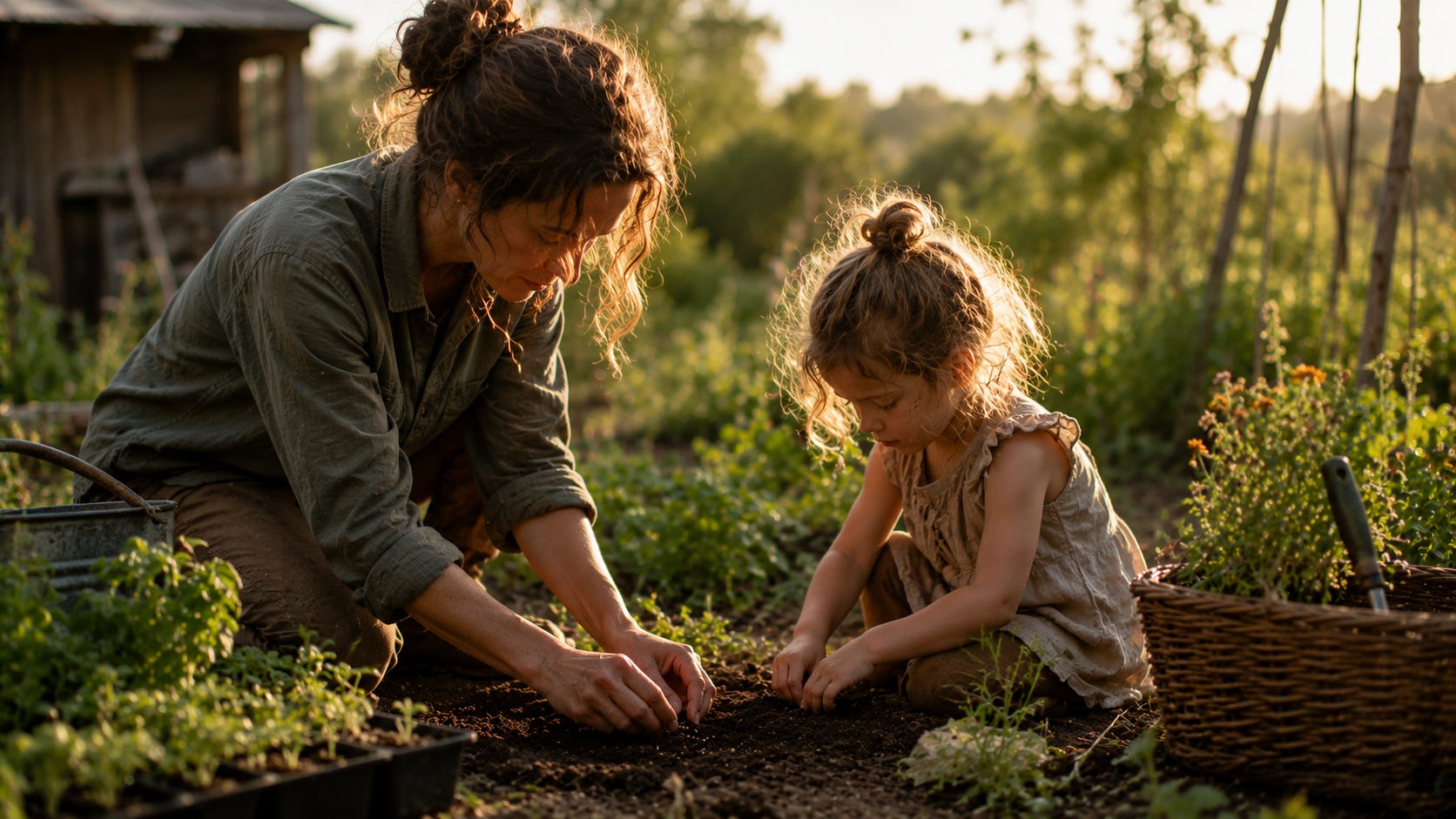
The food sovereignty movement sometimes frames this in terms of large-scale systemic change ~ policy reform, agricultural legislation, corporate accountability. Those things matter. But the pattern of the Scouring teaches something else: the dismantling happened at the home scale, one small convenience at a time. The restoration happens at the same scale. One seed saved. One soil biology rebuilt. One growing journal that accumulates over five seasons into irreplaceable local knowledge. One child who grows up watching their parent put seeds in the ground and learns, without being taught, that this is something humans do.
You cannot dismantle glyphosate regulation from your garden. You can build soil biology resilient enough to work in an imperfect chemical environment. You cannot reverse seed patents from your backyard. You can save heirloom seed and share it, quietly opting out of the subscription model for the most fundamental input in agriculture. You cannot fix the industrial food system from your windowsill. You can grow one pot of herbs that shifts your nervous system’s baseline assessment of your own capability.
Not as trend. Not as protest. As restoration of the knowledge that was never meant to be lost.
The Transformation Milestone
The Layer 3 ~ Seed to Sprout course ends with what I call a transformation milestone. A specific marker that tells you the layer has done its work.
Successfully grow and harvest your first homegrown food from something you started or planted yourself, and taste it. Notice what that tastes like. Notice what that feels like.
This is not a small thing. It is, in fact, the whole point.
Not because growing one plant makes you food sovereign. It doesn’t. Not because one harvest transforms your nervous system regulation. It begins to.
But because something shifts in the quality of relationship you have with the living world when you have participated in it at this level. The grocery store looks different. The farmer’s market looks different. The soil in your garden looks different, because you know now that it is not dirt. The seed rack looks different, because you know now the difference between what you can save and what you cannot.
And you know it not as information but as knowing. In your hands. In your palate. In the record you’re building in your growing journal.
The Scouring was not undone in one season.
But the hobbits planted trees.
And what grew was more beautiful than what had been.
Start anywhere. A pot of herbs on a windowsill counts. One zucchini counts. Amaranth seed planted the day after the new moon counts.
The participation is the point. The knowing grows from there.
NaturWise Living ~ Marama ~ Northern CA Sierras